How to bleed your radiators

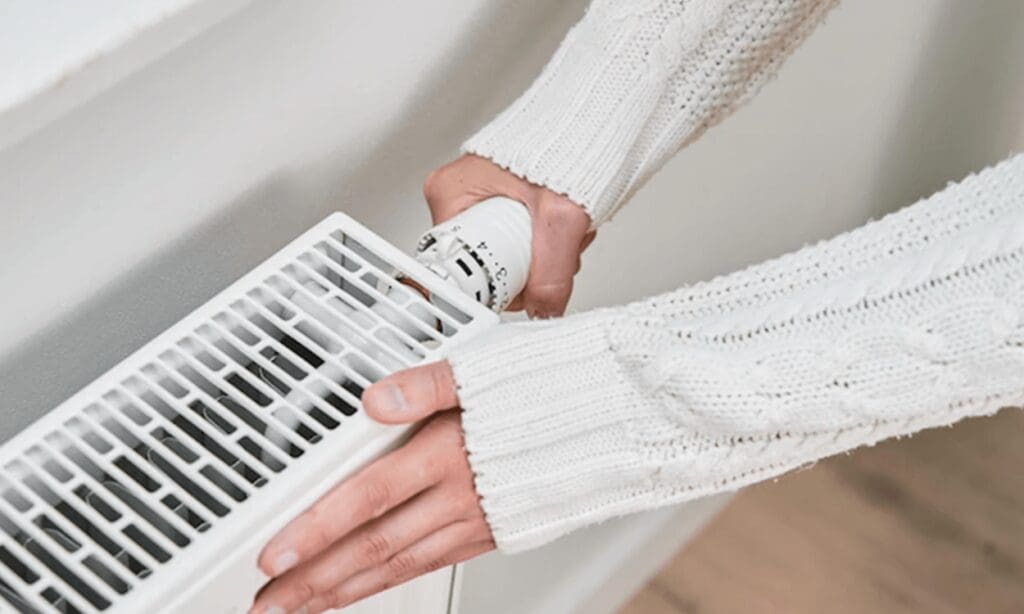
Woman checking radiator temperature

If you’ve noticed that your radiators aren’t heating up properly or are cold at the top and warm at the bottom, they may need bleeding. Luckily, this is a relatively easy job for you to do without the help of a professional, so we’re here to give you a step-by-step guide on how to do it. When would bleeding a radiator be necessary? Radiators need bleeding when there is air trapped in them. This trapped air will stop the warm water circulating within them, which can make them warm at the bottom but cold at the top.  Trapped air means that the central heating system isn’t working efficiently, and it can take a longer time to warm the room, which can cost money – and in a cost of living crisis, this is something we want to reduce as much as possible! Another sign of trapped air is noisy radiators that are making loud banging, clanding or gurgling noises. These sounds are annoying, but are often not a cause of concern. We recommend that you bleed your radiators once a year, even if they are all working properly, as this will ensure that your central heating system is working efficiently. How to bleed your radiators? You’ll only need two or three pieces of equipment to bleed your radiators, both of which are easy to find at a DIY store if you don’t already own them: The first step in bleeding your radiators is to turn your heating off and allow your radiators to cool down completely. This will stop you from burning or scalding yourself on hot water. Once your radiators have cooled down, hold your jug or cloth under the bleed valve and insert the bleed key. The key will fit into the square groove in the centre of the valve at the top of your radiator. Slowly turn the key anti-clockwise until air starts escaping. Don’t worry – you’ll know when the air is escaping because you’ll hear a hissing noise.  Your jug or cloth will be in position to catch any leaking or spraying water. Once the hissing stops and there’s only water coming out, quickly retighten the valve by turning the key clockwise.  Turn your central heating system back on and allow your radiators time to heat up again. If heat is evenly spread through the radiator and it seems to be heating up properly, you’ve fixed the problem. Bleeding your radiators can cause your pressure to drop. Check the pressure by looking at the gauge on your boiler.If the pressure is too low, you’ll need to top it up by using the filling loop. If you are unsure whether the pressure on your boiler has dropped, or if you need assistance when topping it up, speak to one of our friendly team members and arrange a call out. Still not working properly? If you find that your radiators still have cold spots after bleeding them, you may have another issue. Please contact us today to get the assistance of one of our registered Gas Safe engineers.

A guide to central heating system power flushing: what it is and how it works

Powerflush image

There’s no doubt that your central heating system gets mucky. It holds litres of water that circulates around your home via pipes and radiators, so naturally, it will gather some grime, sludge and debris along the way. The solution is to give your system a thorough cleansing with a power flush – a dedicated cleaning method that helps to keep your home’s central water system functioning as intended, whilst also preventing potential problems from occurring in future. What is a power flush? A power flush essentially does what it says on the tin. It’s a powerful cleanse that is used on your home’s central water system to flush out and remove byproducts such as rust from pipework and radiators and other general debris that has naturally built up within your system over time. If left to idly gather, sludge and the other listed byproducts can cause blockages, corrosion and general wear and tear on your central heating system, ultimately reducing its efficiency, lowering its lifespan and potentially leaving you with big bills to pay out of pocket for. What happens during a power flush? A power flush is conducted by an engineer that connects a specialised pumping machine directly to your heating system that circulates water with chemicals throughout your heating system at high pressure. The chemicals that are pumped through your heating system are specially designed to remove the sludge and debris to help clear the system. Once the flush is complete a suitable corrosion inhibitor is added to the system followed by a system water quality test to ensure the water within your heating system is where it needs to be. How long does a power flush take? The time taken to entirely powerflush a central heating system will depend heavily on the type/size of the system and boiler your home has. Not only this, the condition of your home’s heating system will also affect the length of time that will be needed to conduct a thorough clean. Roughly, a power flush will take 6-8 hours to complete but can take a day or two heavily depending on the size and extremity of your water system’s condition. How to tell if your system needs a power flush Your home’s central heating system will tell you when it’s in need of some TLC and communicates the signs it needs a power flush in different ways. Spotting the signs: Benefits of a power flush As stated previously, a powerflush can help to keep your boiler and central heating system running smoothly and efficiently. As a result of directly flushing the system, it helps to improve the overall system performance which means your heating doesn’t have to work as hard to push the water through. This in itself means less energy is consumed,  and therefore, lower energy bills.  Not to mention all the other benefits provided by giving your central heating system a power flush:  How often should you flush your central heating system? If you get your boiler serviced and checked annually (which is highly recommended), then your heating engineer will do an inspection of your overall heating system as part of their routine checks anyway. It will be at this point that they may advise you to pursue a central heating system power flush if they notice any blockages or problems. If you’re getting a new boiler installed into your home, then a power flush should be executed as part of the installation process. Who should perform the power flush? A power flush should not be conducted by yourself or even by a very handy DIY-obsessed friend/family member. A fully qualified heating engineer should always be the one to work on a power flush service as they hold the required qualifications and expertise needed to perform a power flush in accordance with regulations and safety standards. Any mistakes made to the heating system could end up leaving it in a worse state than it was before, so ensure that a qualified professional is the one to do the job. Our team of Gas-Safe registered heating engineers hold the qualifications, accreditations and experience to handle both simple and complex central heating systems. How much will it cost?  The cost of a power flush will depend on the size of your home’s system and the severity of the flush itself. Pricing for a power flush can start at around £500, but can increase depending on the size and condition of your system. Consult with your engineer to understand how much a power flush for your home could cost and to see if/what financing options they may have available.  Want to arrange a call-out? Our friendly and qualified Gas-Safe registered team of engineers are on hand to review your home’s central heating system and provide our expertise to conduct a power flush should your home need it. Get in touch with one of the team today.

What is Green Plumbing?

Green Plumbing blog header

With the rising temperatures, melting ice caps and air pollution, many people are looking to more environmentally friendly solutions. Eating less meat and recycling frequently are important ways of reducing your individual impact on global warming, but what if we told you that there’s a way for your plumbing to help save the planet, and save you money, without you really needing to think about it on a daily basis? With World Earth Day upon us, at GreenSmart we wanted to spread the word about green plumbing so that we can help you be more eco-friendly. What is green plumbing? Green plumbing is the investment in eco-friendly modifications and products to minimise water consumption, conserve energy, decrease chemical effects and lower utility bills. It can include the installation of water saving taps, solar-powered hot water, water storage tanks, septic tanks, rainwater harvesting devices and rainwater powered toilets and washing machines.  Traditional kitchen and bathroom plumbing is notoriously inefficient. A standard water heater uses a large amount of energy by constantly keeping hot water ready, even during times when no one in the building would use it. Standard toilets often use several gallons of water for a single flush, but green plumbing helps to resolve this waste to help make homes and businesses more efficient and environmentally friendly. What are the advantages of green plumbing? Obviously, the biggest advantages of green plumbing are the decreased environmental impact of eco plumbing systems, and the reduced waste that they produce.  As well as this, they also save money, extend the usage of your appliances due to the reduced water flow, and improve the health and hygiene of those living in the property due to the better air quality and uncontaminated water supply. Does green plumbing cost much? Taking on modifications in your property, depending on how many you make and which you choose, can be costly in the short-term. However, green plumbing is guaranteed to save money on bills because it diminishes waste. Water, for example, is easily wasted – especially in the kitchen and bathroom. A leaky tap, for example, could waste up to 3000 gallons of water a year, and flushing the toilet uses between 3 and 6 litres of water per flush. Installing low-flow showers and toilets can minimise water consumption and reduce your water bills, and installing a tankless water heater can save you money on energy bills because they heat water only when you need it, rather than constantly – like traditional plumbing measures. As well as this, the reduction in water flow ensures less wear and tear and therefore fewer repairs or replacements of pipes and appliances, contributing to future savings too. Contact GreenSmart today to discuss our green plumbing services and find out how we could help you be more environmentally and economically friendly.

Meet Damian Bush, GreenSmart Director

Say Hi to Damian I’m Damian, one of the two current Directors here at GreenSmart Services. My main passion and ambition is the development of the business. I want GreenSmart Services to be a thriving and successful business and to become the ‘go-to’ plumbing, heating and gas company in Bath and surrounding areas. A huge priority for me/GreenSmart is to provide a great working environment for our employees. Workplace wellbeing and company culture are very important to us and we’re on a real journey to develop that. Outside of work, I enjoy getting lost in a good book or spending time with my friends and family.  I was born and raised in Bath, Somerset. Bath is such a fulfilling and enjoyable place to live, work and play, there’s so much to offer and it neighbours larger cities such as Bristol so there are plenty of options for things to do and outings. I’m quite an active person and enjoy physical activities such as running and cycling, plus I love the occasional skiing trip. GreenSmart consumes a lot of my free time. It’s just a part of the job, especially being a director of the business. But when I do manage to get some breathing space on a weekend, I enjoy exploring what cuisine options I can find. After all, a weekend wouldn’t be a weekend without finding a great new place to grab a bite to eat. What were you doing before you joined GreenSmart Services? The construction industry has been a part of my life since I was a teenager. I’ve been in the construction environment since I was around the age of 14 working with my Dad, so I’ve essentially matured and grown with the trade. In the past, I’ve worked as a site labourer working on different hands-on projects. Before GreenSmart, I also worked for another heating and plumbing company so have had my fair share of experience within the industry. Although, it’s not been all 100% construction and trade! I did have a short stint as a sales assistant at Marks and Spencer’s and Woolworths! Your career with GreenSmart to date As the Managing Director, my role is ever-changing along with the business growth so currently, I’m much less involved with the tools of the trade than I was previously. However, I am very flexible and good at adapting to my environment so either one works for me, whether on the tools, out and about or in the office. I love that whatever my role is, on any given day I’m able to deal with and communicate with people regardless. I’m a big people person and love chatting with others, getting to know them and building long-lasting relationships both inside and outside of work. The long-term plan for the business is to build and evolve GreenSmart into the company we know it can be. We have a great foundation and we know exactly who we want to be. We want the business to be friendly and to offer genuine solutions to problems, not short-term fixes. I want the business to stand as a beacon for the industry, to educate youth and help them develop their skills, to help reform some of the lesser preconceptions that occasionally still do exist about the construction industry, to encourage all members of the team to think outside of the box whilst doing it all with a solid structure of honesty and integrity. What’s your favourite thing about working for GreenSmart Services?  It has to be meeting new people and developing and building those long-standing relationships with them, whether that’s our clients, partners, my amazing teammates, contractors, subcontractors or others. I also love the idea of legacy, building something and being part of something that I can be really proud of that will be around long after me. Let’s get to know more about you with some quickfire questions: If you could go anywhere in the world, where would it be? Wherever the best skiing is! What are three things you can’t live without?  Phone, a purpose (deep answer), my cats (Ray and Bob).  Is there a hobby/activity you’d like to get better at?  I’d love to learn to play the piano.
Our Favourite Kitchen Styles We Cannot Wait to See in 2023

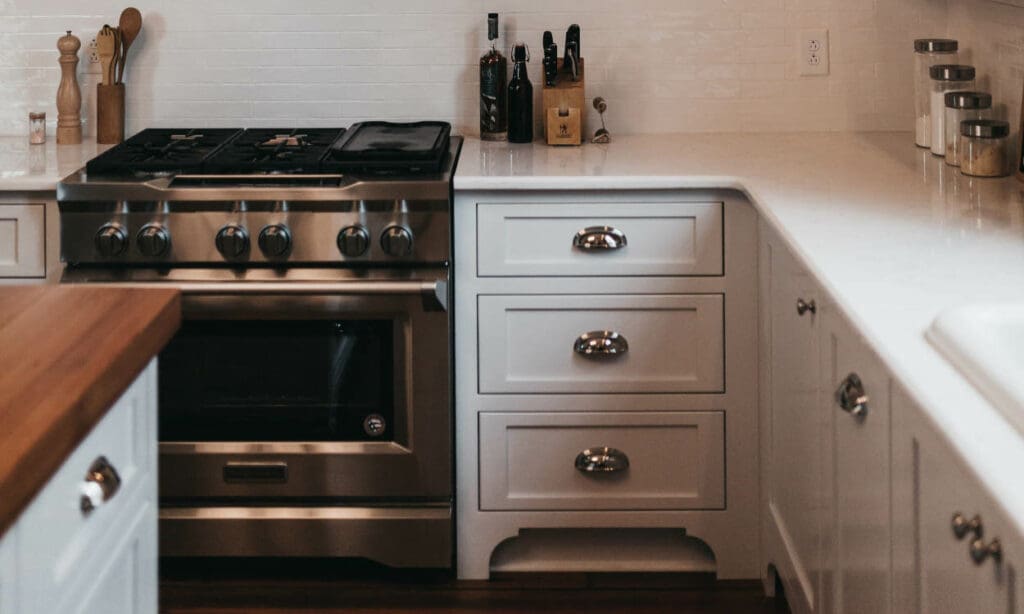
White shaker style kitchen with marble top and silver handles

The humble kitchen is the most important and influential room in your entire home. Even for those who are perhaps not avid cooks, kitchens are still important parts of any home. They are where stories are told, meals are enjoyed, experiences are shared and memories are made. With the world moving in a direction of combining aesthetics with practicality, we’re excited to see what 2023 has in store for kitchen interiors and styles. And if you’re hungry for a new kitchen installation this year, have a gander at some of our favourite kitchen designs and trends cropping up this year for some inspiration. Trending Styles Organic & Eco-friendly With the population shifting focus towards nature and the environment, kitchen interiors have been and will continue to make a beeline towards organic, natural and sustainable styles. Homes in general have seen an increase in natural materials and decors such as plants, woods, wicker, and concrete incorporated into rooms and it would seem this won’t be stopping this year with kitchens. We’re pretty thankful to see this style becoming mainstream. Anything that can help reduce the use of microplastics and materials that aren’t brilliantly friendly to the environment is a win in our books! Re-use & Recycled Out with the old and in with the new couldn’t be farther from reality in 2023. We’re seeing a lot of repurposing of items and furnishings, all being added throughout entire homes in general. It’s a great way to show some love to an item that either had a previous purpose or belonged to someone else. And don’t discredit the idea of recycling something to add to your kitchen so easily! Yes, there are large-scale DIY projects you can do to repurpose an item for your kitchen but sometimes just buying a second-hand set of chairs off eBay or Facebook Marketplace and giving them a fresh lick of paint can really bring your food-prepping haven to life. Warm & Earthy Creating warmth via colours, textures, lighting etc creates an inviting and comforting feel which is one of the biggest attributes most people want when it comes to their kitchen. It needs to feel safe, welcoming and accommodating so using soft elements and natural lighting will bring this feeling of warmth into the kitchen. Combining rustic features with softer elements such as wood floors and neutral wall paints or wallpaper (and vice versa) can help to achieve this and make your kitchen feel earthy and spirited. Waking up to get breakfast or your morning coffee in a kitchen that breathes energy and warmth is perhaps the best way to feel rejuvenated and ready for the day ahead.  Patterns & Textures Fluted If you’re searching for textures that just scream chic, then look no further than fluted (and ribbed textures). Whether you opt for bamboo, wood or other, this texture is an excellent addition to any modern kitchen. It’s a versatile style to incorporate into your kitchen and adds a real pop of character to the room. Plus, the movement and dramatic style further compliments the natural energy harnessed within kitchen spaces. Ribbed and fluted textures can be added to cupboards and drawers but are more popularly stylised on kitchen islands.  Copper Copper and occasionally brass metals have been popular for a while now and are being increasingly introduced throughout homes, in particular bathrooms. But this style is starting to branch beyond the washroom environment and making its way into the kitchen scene. Copper accentuates other features of the kitchen such as the drawers, taps and even backsplashes. If you want your kitchen to hone in on that rustic and warm feel, then mixing in some metal features like copper is the way to go. Wood Like mentioned earlier, organic and natural assets such as wood are highly favoured elements of kitchens. Recent years saw popularity in lighter woods the likes of oaks and birch which were used for past trending Scandi-style kitchens. But now is the turn of slightly more dramatic and richer woods such as walnut and mahogany. Even painted woods are becoming quite trendy which we love to see. Whilst these can also include matte black painted wood, we have also seen some truly unique, fun and bolder choices such as greens, pinks and yellows.  Colours Forest Greens Forest green has been a popular colour in the world of interior design for some time now but is something we’re looking forward to seeing more of this year in the kitchen especially. Rich Modern Sleek Ocean Blues Deep blues have also been popular in tandem with greens too. We’re especially fans of the blue-green colours that make us think of the ocean and navy colours too.  Luxurious Adventurous Warming Matte Blacks Matte blacks are typically used in kitchens as accents but do also work well as the main attraction, especially if paired with complimentary wood flooring and furnishings.  Powerful Contemporary  Sophisticated Sage Greens Sage greens are seeing the light of day this year, particularly in those organic and natural kitchens. It’s a luscious and calming colour that replicates nature. We’re all for it. Calming Refreshing Harmonious Dusty Pinks Both a brilliant pairing with matte blacks and sage greens, but a solo trending colour by itself. Dusty pink kitchens are on the rise and partner superbly with lighter woods and patterns such as herringbone.  Youthful Warming Invigorating Earthy Terracottas Terracottas and colours in the clay and rust palette are excellent for creating that organic and earthy feel that we’re looking forward to seeing in 2023. Somehow, it’s a style that is both classical and modern. Inviting Stimulating Enthusiastic Warm Whites Classics are timeless. The familiarity of whites for a kitchen is comforting but with the trend of warmth, whites that are not too polished seem to be taking over this year. We think they look brilliant and work well with all of the kitchen colour trends of 2023. Friendly Classical Versatile Features Styled Tiles/Slab Backsplashes Gone are the days of plain white wall tiles and backsplashes. 2023 is the
Skills and Qualifications Needed to Become a Plumber

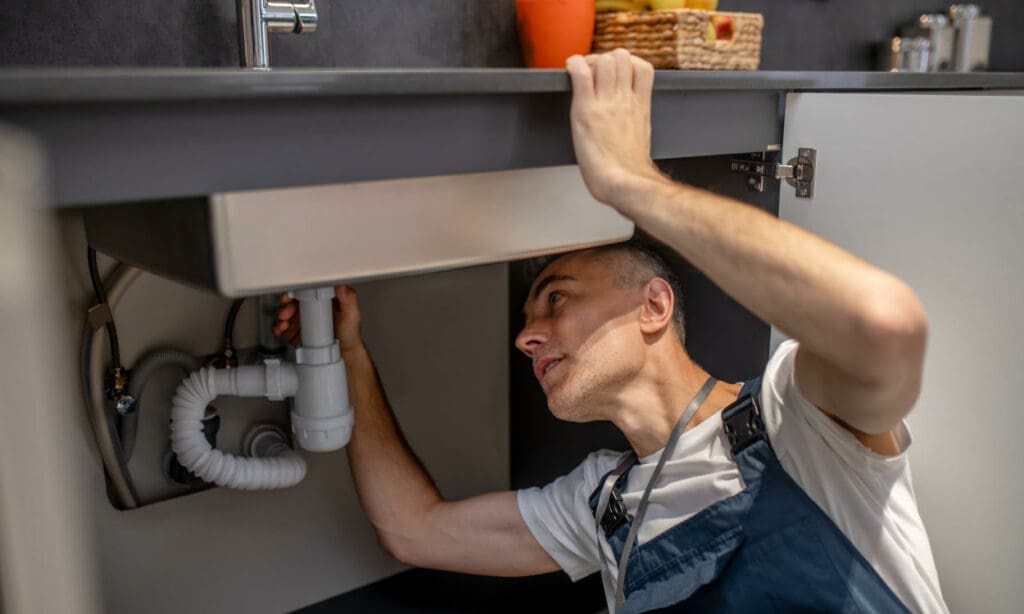
Man carefully examining bottom of sink and pipe

Whether you’re a school leaver searching for your first job, trying out different industries to see which fits you best or someone with plenty of past job experience but looking to retrain into a new career, the life of a plumber is certainly a fruitful and dynamic one. It’s a role that is always in demand and valued. If you enjoy helping people and doing hands-on work, this vocation is certainly one to start considering if you haven’t already. Here’s what you need to know about kickstarting this journey, including the skills and qualifications you’ll need to have in your back pocket. Responsibilities A plumber is a tradesperson that either works for themselves, a company or a local council. A plumber installs and maintains water, plumbing and central heating systems for homes or commercial buildings such as offices. Plumbers can also be a part of blueprinting tasks and work on designing systems and fixtures for a property. The responsibilities of a plumber will vary from project to project. The general duties of a plumber include, but are not limited to:  Skills As with any career, there’s a mixture of hard skills and soft skills required to become a plumber. But the combination of these two skill types is so important for a plumber. You deal with members of the public and are entrusted to work on their properties so a strong toolkit of both personal attributes/characteristics and learnt skills are paramount for generating the ultimate customer experience for our clients. Some of the skills usually desired for plumbers to possess include: Working hours This can vary from tradesperson to tradesperson depending on the hours you work and your employment type, whether part-time, full-time, contract, permanent or temp. One thing that is guaranteed is that you don’t have to worry about sitting behind a desk for 8 hours a day. Plumbers operate on fieldwork so are usually on their feet for most of the day. Whilst the estimated hours of work are the usual 9-5, plumbers can also be required for emergency call-outs and last-minute emergency fixes. After all, a burst pipe doesn’t work on our time. Because of this, the estimated working hours for a plumber is around 37 – 40 hours per week but are subject to being longer as they may be needed for morning shifts, late-night shifts and even weekends/bank holidays. The hours are basically as and when you’re needed. Salary Your salary will be dependent on the hours you work and your skills/experience level. This isn’t uncommon and is usually the case for any vocation – the newer you are to a role and if you’re still learning the ropes, you’ll likely be sitting on the lower salary mark but with time, experience and expertise, so will too the money. In saying this, as there is seemingly a constant demand for plumbers due to how valuable and significant the role is, the pay for plumbers isn’t too shabby. The salary starts at roughly £15,000 per year for starters and can meet £40,000 per year for experienced plumbers. (Source: National Careers Service) The current average salary for plumbers in the UK is £30,838. This is as of February 2023 and subject to change. (Source: indeed) How to become a plumber Now you have a bit of background behind the career, earnings and requirements of a plumber, think it’s something you’re ready to go after? In that case, let’s walk through the different ways you can achieve your goal of becoming a plumber. Although you need to work hard, it’s not a career that you need to dedicate years and years to get into. And if you didn’t come out of secondary education with an A* in every single subject, don’t worry. It’s desirable to have at least your Maths and English GCSE at a grade C (4/5). What’s sought out more than GCSE results is your further education after secondary. You can apply for a plumbing college course or apprenticeship. Even work experience or working alongside a friend or family member as a ‘plumber’s assistant/mate’ can help further you along the path of becoming a plumber. If working on a construction site, you will need to make sure you have a CSCS card first.  Qualifications you’ll need to have as a plumber Whether you obtain these qualifications via a college course, apprenticeship or other, you’ll ideally want to come out from your training/learning with a suitable qualification to add to your CV that shows your credibility and demonstrates employability to an employer.  The most common qualifications for a plumber in the UK are: To further add to your credibility, you’ll also want to become registered as a Gas Safe engineer/plumber on the UK Gas Safe Register. In order to be added to the register, you will be required to hold a Level 3 Diploma in Gas Utilisation Installation and Maintenance or a Level 3 NVQ in Gas Installation and Maintenance.  What is the typical career progression ladder for a plumber? Already thinking of the journey ahead and the career progression of a plumber? Of course, you must learn to walk before you can run but there’s no harm in scoping out the potential future promotions/pathways set out ahead of you. The role of a plumber can be varied and whilst sometimes you can specialise in one area such as ventilation, pipework, gas etc, you can also become a jack of all trades. If you’ve got your sights set on bigger sights, you may even become a manager or director of a plumbing business. Alternatively, if you enjoy passing your knowledge on to others, you could redirect back to where you may have begun your training and become a tutor or training professional for a college or educational institute.  Think it’s the career for you? You’ve learnt what you need and how to become a plumber, now the power is in your hands and ultimately it’s your decision if it’s a career you want to pursue. We
6 Useful Plumbing & Heating Tips for 2023

Supply system. Pipes for pipeline

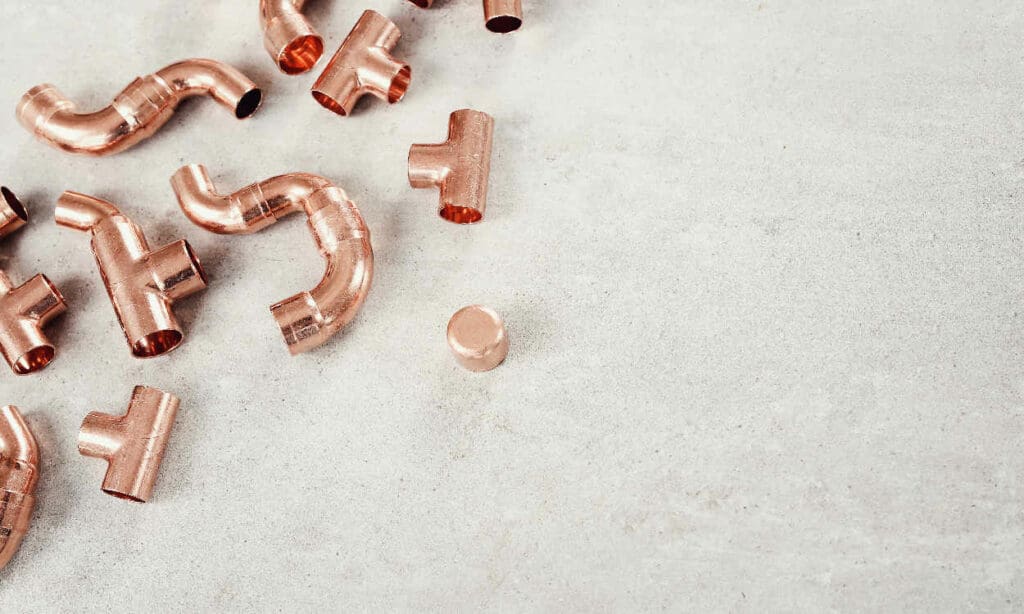
Our homes’ plumbing and heating system is something that doesn’t really cross our minds. It’s just there working in the background and doing its job. That is until a problem occurs. Whilst larger problems require professional assistance, there are smaller ones that you can attend to by yourself such as unclogging the toilet or tightening a loose pipe fitting. However, no matter how manageable the problem is, it’ll be much less tiresome to prevent these issues from occurring to begin with. These tips can help you save the hassle and time of having to tend to any potential problems that could arise. Plus some are just good-to-know to help save some pennies. 1. Know where to locate your home’s main water valve/stop tap It’s incredibly useful to know where your home’s main water valve/stop tap is in case of those extremities such as a burst pipe. There are two types of stop taps, internal and external.  An inside stop tap will typically be situated under a kitchen sink or in an airing cupboard, but if not you can also find it underneath your stairs, floorboards, near your front door, or within a utility room such as a bathroom or garage. The valve itself looks just like a tap without a spout.  In order to turn off your mains water supply from the stop tap, turn the valve itself clockwise. If you can begin to feel resistance when turning the valve, do not exceed this and stop turning. 2. Try to avoid using chemical drain cleaners – they can do more harm than good A lot of the chemical drain cleaner products on the shelves are pretty convincing but don’t be easily fooled. Most of the time they’re not too effective and can sometimes even cause more harm than good. Because of the harsh chemicals that are used within these products, they can damage pipes and can even cause erosion. 3. Don’t pour grease, oils, or food down the drains Pouring grease, oils, and food down your drains can cause pretty severe blockages within your waste pipework. The blockage isn’t usually immediate and will build up over time. Greases will solidify and large chunks of food can get stuck, ultimately creating stubborn blockages in your pipes. If you want to dispose of any fats used for cooking, try using a material such as tinfoil to capture the waste. Place it on top of the drain and slightly push in to mold the drain shape and pour the oils in here (once cooled down, not whilst they are scorching hot!). Then scrunch up the material to capture the greases/oils and dispose of it with normal household waste. For food items, particularly those that are a combination of liquids and food chunks (such as soups and canned items), use a strainer/sieve to separate the two so the liquids can go down the drain as normal but the food chunks can be binned. 4. Prevent pipes from freezing over with insulation Insulating pipes (especially in unheated areas like lofts and garages) will help prevent any frost buildup and allow the water to flow easily. There are plenty of affordable pipe lagging and tank jackets available online and in most DIY/hardware retailers that you can use to insulate your home’s pipes yourself.  5. Minimise draughts by insulating your windows, doors, and more Older UK homes that have poor insulation suffer from draughts more so than newbuilds, so applying some preventative measures to help tackle these will keep your home warmer at lower costs. You can purchase plenty of different types of insulation for windows, doors, and floors to help draught-proof your home without breaking the bank. However, if you do want to be more sparing with your money, you can makeshift a few draught excluders that can be used at the bottom of your doors to stop the cold air from creeping in. Just simply take some old materials such as blankets, shirts, jackets, or anything that you’d be ok with having on the floor and roll them up and place them at the bottom of your doors to obscure the gap where the draughts enter. 6. Turn individual radiators off in lesser-used rooms One thing to save money on your heating is to manually turn off the dials of radiators in rooms that are not used. Whether it’s the spare bedroom that only has guests 3 times a year or the bathroom that you only visit a handful of times throughout the day, turning the radiators off at the valves means heat won’t be distributed to a room that there’s no point in heating. If you need help identifying the valve for each room’s radiator, it will be the manual lever at the bottom of your radiators, usually labeled with marks from 1-6, with a 0 to turn it completely off. And that concludes our tips to take with you this year. If you want to prevent any of the larger, more severe problems from occurring within your home, you’ll want to look at getting a boiler service completed. And if those problems have already begun to appear, it’s high time to get them sorted. Get in touch with one of the expert and friendly GreenSmart Services engineers so that those emergencies can be dealt with promptly. 

A Guide to Smart Meters: Modernising Energy Monitoring

Guide to smart meters banner

Whether you have one or not, you’ve likely heard about smart meters in recent years. Their presence is inescapable and won’t be phasing out any time soon thanks to a government-led initiative being rolled out which is offering smart meters to all UK homes by 2024. Throughout this article, we’ll explore more about what a smart meter is, the benefits of having one, and if it is a mandatory requirement to have one in your home.  What are smart meters? A smart meter is an electronic device that replicates a home’s gas and electricity meter box. The device itself is an easy-to-use small display screen that allows you to easily read your gas/electric readings. It works by taking automatic readings of your gas and electricity usage which are then sent to your energy supplier via a remote connection whilst also displaying your home’s energy consumption via the display screen to you. No more do you need to be trekking outside in your dressing gown and slippers in the cold with your key in hand or have to feel like you’re trying to land a plane with the systematic display controls to take a reading. A smart meter eliminates all of that hassle whilst also bringing energy reading methods into the modern age of digitalization. We all love a good touchscreen device. Types of smart meters There are two types of smart meters currently being rolled out, 1st generation and 2nd generation (abbreviated respectively to SMETS1 and SMETS2). SMETS1 smart meters are, as the name implies, the first generation of meters to be distributed to homes. They use a 3G connection to feed readings data to your energy supplier. This does present an issue of the meter itself becoming incoherent if switching energy suppliers. However, these first-gen meters are being gradually replaced with second-gen meters. SMETS2 smart meters are the successor to the SMETS1 smart meter. These are the types of smart meters more commonly being rolled out amongst UK homes. These don’t rely on 3G technology and instead work by having all of the data collected sent to a central network that can be accessed by your energy supplier, meaning they won’t become incoherent if you switch suppliers. Are smart meters compulsory? The initiative to roll out smart meters to homes was introduced in 2012, with the target goal in place of offering every UK home a smart meter by 2020. However, this timeframe was reevaluated and pushed back to a more reachable deadline of 2024-2025. With this being said, it is not actually mandatory to have a smart meter. Your service provider must offer you one, but you do not have to accept. It’s important to do some research beforehand and weigh out the pros and cons of smart meters to help you decide if you wish to have one. We would also advise discussing the processes and steps required with your service provider to ultimately help you make your decision. So, if you have not yet been approached by your service provider about a smart meter, you will be offered the option to have one installed at some point. Likewise, you can check to see if you are eligible for one by contacting your service provider. And when you are contacted about a smart meter, you are not obliged to have one if it is not something you want.  How much will it cost? There is actually no upfront cost for getting a smart meter installed in your home. However, you will want to enquire further with your service provider as sometimes, the cost to cover the rollout may be included within your gas/electricity payments. What is the benefit of a smart meter? As is the case with anything, technology especially, there will also be plenty of pros accompanied by some cons. Smart meters themselves are plenty beneficial for you, your energy supplier, and the environment. Provides more accuracy on bills You won’t be billed for an estimation of the energy you use within your household but instead only for the absolute, accurate amount of energy consumed. Reduces energy consumption Because you get an immediate view of your home’s energy consumption as and when energy is being used thanks to real-time data, you’ll be able to better manage what you use and how much, which can ultimately reduce the amount of energy (and money) you consume. Smart decisions, smart savings. Modernizes our energy systems A network of smart meters will help contribute to the country’s efforts to make a more sustainable, smart energy grid. Your one small smart meter will be part of millions of others that are now installed amongst UK homes and businesses, meaning you’d be helping to positively reduce our global carbon footprint. Provides insights for energy providers As energy suppliers can track and analyze the data they receive from the recordings to understand more about our collective energy consumption, they will be able to make smarter and more efficient decisions with energy production. Make use of time-of-use tariffs With a smart meter, you can make use of exclusive tariffs offered by some energy suppliers. These are ‘time-of use’ tariffs that provide cheaper prices to smart meter owners. You’ll need to inquire about this with your energy provider, as not all offer them and the tariff will be different per supplier.  Are there any negatives? Subject to signal issues Because smart meters solely rely on transmitting data across a mobile network, any disruption to the signal would result in the readings sent to your service provider being inaccurate and estimated once again, potentially increasing your energy bill. Cannot revert back to an old system Once a smart meter has been installed, you cannot revert back to an old system, meaning that you’ll need to be certain that going down the smart meter route is correct for you. Could lead to family friction If you know what energy is being used and when, it could potentially lead to some finger-pointing and squabbles in family households

Ways to Make Your Home More Energy Efficient

Journeying to make a home more energy efficient is now a shared goal of many UK homeowners and renters alike, no thanks to the colossal expenses and bills that most are having to dish out. By improving the energy efficiency of your home, you can avoid having to pay out of pocket on unnecessary expenses. 2022 already has been hit heavily by a cost of living crisis, which has resulted in many UK families having to pay more than previous years. In fact, the energy price cap has raised to above £3,000 per year, which has increased by roughly £1000. Not quite sure where or how to start making your home more energy efficient? We’ve got some guidance on ways to achieve this so that you can save your money whilst also doing your bit for the planet. How energy efficient is my home? First things first though, what is meant by energy efficiency and how do you find out how energy efficient your property is? Energy efficiency means consuming less power/energy to achieve the same outcome. The Environmental and Energy Study Institute (EESI) defines it as a means of eliminating energy waste, something that a lot of homes in the UK do without realising. A study conducted by Ofgem in 2020 showed that the average British household uses roughly 242 kWh of electricity and 1,000 kWh of gas each month. Most of the population strives to do a little better when it comes to our carbon footprint for the sake of the planet and the first step in doing this is by identifying how energy efficient your home is in its current state. The easiest way to get an understanding of how energy efficient your home is, will be to look at your Energy Performance Certificate (EPC). Your landlord should have provided you with a copy of this when you initially moved into the property, but for a digital view, you can search through the GOV.UK EPC register. An EPC will give you a visual graph that depicts your property’s current and potential energy rating, with a rating from A to G. If you use an EPC to gauge your home’s energy efficiency, you can identify improvements to make in your household then have another EPC completed after to get an updated report based on the changes made. Alternatively, for a more detailed reading of your home’s energy usage and consumption, you can perform a home energy audit. How can you make your home more energy efficient? Insulate your home Floor Adding insulation to floors in a house of any age, whether new or old, can massively prevent heat loss from your home. The materials of your floors will determine the type of insulation needed. If your home has suspended flooring, wool or foam insulation can be inserted between the joints of the suspended floors. If your home has solid flooring made of stone or a type of aggregate such as concrete, a layer of insulation will be placed on top of this before a floor covering is applied to prevent the coldness of the hardened material from seeping through. As heat rises, it shouldn’t really matter about insulating floors in rooms upstairs. However, if you have a room above an open and cold space such as a garage or an outside walkway (if you live in a maisonette), floor installation can be beneficial. Wall The walls of your home will typically be the biggest contributor to heat loss, in fact roughly one third of heat lost is attributed to a home’s walls. The amount of heat loss your home will suffer from depending on the type of property you rent or own. For example if you live in an apartment, or semi-terraced house, you’ll be less susceptible to heat loss however, a terraced house will be more susceptible to heat loss. Because every home is different and certain neighbourhoods were collectively built at different time periods, the type of insulation you’ll need for your home’s walls will be different from someone else’s. If your home has solid walls, internal wall insulation boards can be fitted to prevent heat loss. If your home has cavity walls, which most now do, then insulation can be built in the gap within the cavities. Roof A lot of heat can escape through your roof or loft if not well insulated. You’ll want any heat that’s in your home to stay firmly inside your home and rebound back around your home to keep it heated rather than escaping through the roof. Usually a wool-type insulation is laid out on the surface of your loft both between the joints in the loft and then with an additional layer on top of the joints. Double or triple glazing Majority ‘newer’ UK homes will be fitted with double glazed windows, simply as it is part of the building regulations that tradespeople must comply with as a means of improving energy efficiency. Although in saying this, it is not actually illegal to have single glazing installed in homes. A double glazed window is just two glass panes fitted with a gap inbetween usually filled with air or an imobile gas. The best part about double-glazing is that not only is it energy efficient, but also helps with noise reduction. Triple glazing is the same but with one more layer of glass, and hence another gap of air/gas. Whilst triple glazing is more effective, it is also more costly. If your home has single glazed windows and you want to upgrade, double-glazing will do the job. Central heating system Your central heating system does what it says on the tin. It’s important to make sure you’re maximising its potential without creating any heat loss. There are some ways you can achieve this and they’re pretty straightforward. Firstly, it may be worth looking at installing a more energy efficient boiler than your current one. Now each type of boiler will have its own model that is ‘more energy

Merry Christmas & Happy New Year

Merry Christmas

We’ve had a great year here at GreenSmart Services and are massively thankful to all of our clients and partners during 2022 for their custom and kindness. Our business has clocked some brilliant milestones this year and we wouldn’t have been able to do any of it without you. We: So as a little Christmassy thank you from us, we have a video made just for you: It’s been a real honour to have served all of you in 2022, whether we were needed for an installation, renovation, some scheduled maintenance, or an emergency call-out. We’re still around during the holidays, so are available if you need us. However, the team will not be working on Christmas Day. We hope you have a Merry Christmas and a Happy New Year.
Advantages and Disadvantages of Underfloor Heating

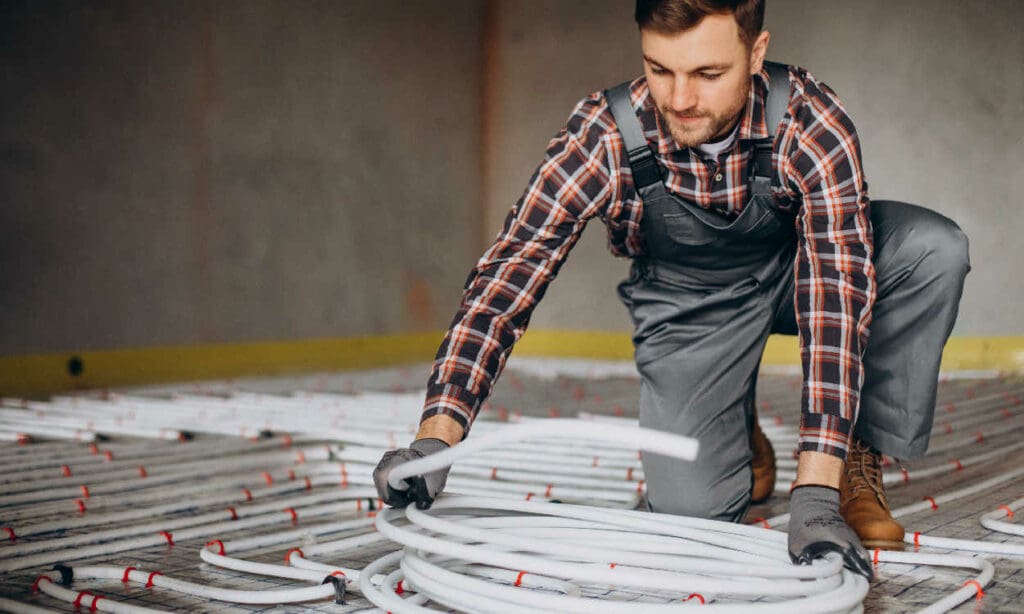
In our world today, everything is about finding a fine balance between practicality and aesthetics. One major feature that a lot of homeowners and even businesses like to implement into their spaces is hidden furnishings and electrics. By ‘hiding’ elements of a property such as wiring and pipes, it helps to keep spaces looking neat and refined. Underfloor heating is slowly becoming more popular and demanded in homes across the nation with the underfloor heating market (UFH) having grown in the past few years with a last reported market share of 7.7%. We’ll look through the pros and cons of this heating system to learn if it’s worth the investment. What is underfloor heating & how does it work? As the name suggests, this is a type of heating system that is installed underneath your floors, essentially functioning as a giant radiator. Underfloor heating provides heat distributed evenly around your house, leaving it beautifully toasty and comfortable. There are 2 different forms of underfloor heating, water and electrical, often referred to as ‘wet’ and ‘dry’. Water systems use a continuous stretch of pipe to run heated water from your central heating system whilst electrical systems use electric wires to generate heat. Both of these will be installed on top of insulation so that the heat may rise up. A traditional radiator’s water can reach very high temperatures, making it extremely hot to the touch while also posing a risk of increased energy waste. Due to the even distribution of the heat and the fact that underfloor heating operates at lower temperatures, less energy is wasted and heat is gradually distributed throughout your room(s). Is my home suited for underfloor heating? Most homes are eligible to have underfloor heating installed. Perhaps you’re concerned that because you live in a new-build, your property will not be permitted or suitable for the installation but this is not the case. In fact quite the opposite as new build homes have been constructed under the Building Regulations legislation, meaning they meet the insulation requirements stated within. Underfloor heating can also be installed in older homes too, although if lacking in insulation, this will need to be addressed prior to any underfloor heating installations. There’s almost no limitations when it comes to underfloor heating, it’s brilliantly versatile and suited for most properties. You can choose whether to have underfloor heating installed in just one room, multiple or under all your rooms’ floors. Typically, the most common room to have underfloor heating installed in is the bathroom, with the kitchen being the second favourite.  What are the advantages of underfloor heating? Efficiency Whilst many homes will typically have a radiator in roughly every room, there will always be ‘blind spots’ where a draft can be felt or where the temperature is generally lower compared to that closer to the radiator. This can make for mismatched heating within rooms and a generally uncomfortable feel. Underfloor heating is far more efficient as it heats rooms evenly and because hot air rises, the heat will eventually be distributed across every square inch of the room. Lower energy bills As underfloor heating is operated at much lower temperatures compared to radiators, they do not require anywhere near as much energy to power them, saving some money on bills which is a plus in most people’s books. Opens up some space Although not the largest objects in a room, radiators can cause some spatial issues from time to time. Underfloor heating eliminates this and frees up some wall space for decorations and any furniture that you previously could not push all the way up against the wall. Plus, you no longer would need to fish out toys and all the other bits the kids throw down the radiator.  Compatibility There’s little to no limitation to the types of flooring you can install underfloor heating underneath. Regardless of if your home has carpets, floor tiles, lamination, vinyl, wood, stone, underfloor heating can still be used.  Safety They may not appear unsafe on the surface, radiators can actually be fairly dangerous objects, especially with bump-prone little ones. Not only this but radiators can cause minor burns due to the incense temperatures they emit. Underfloor heating does not pose this risk as everything is tucked away and hidden beneath the floors. Out of sight, out of mind. No maintenance Whilst bleeding traditional radiators is quite an easy job and requires nothing more than a radiator key and some towels, it’s still extra maintenance to do on an object that most people would rather have just sit in the background. Underfloor heating practically doesn’t need you to carry out maintenance so there’s no extra hassle involved for you. It might require the occasional servicing but that’s a job for an engineer. Silence Particularly with older heating systems, pipes can sometimes make a fair bit of noise when you turn your heating on. Underfloor heating runs silently through your home so you won’t even notice its there.  Adds value Since underfloor heating is a modern, luxurious and more beneficial heating system, it ticks the boxes for prospective home buyers, increasing the value of your home. What are the disadvantages of underfloor heating? Costs The price tag for underfloor heating installation is never going to be the cheapest. The price will massively vary from place to place but will typically be more expensive for larger rooms or whole home installation. If the conditions of your home need some work too, such as extra insulation, then prices can go up a little more to cover this addition too. Run time Because underfloor heating operates at a much lower temperature than traditional radiators, it can take a little bit longer to heat up, sometimes taking up to an hour to heat up a room. But if you have flooring that is a better conductor for heat such as floor tiles, it shouldn’t take too long to heat up. Decor restrictions Some items of furniture may be a little too

7 Ways to Increase Your Boiler’s Lifespan

Let’s face it, with the ongoing increase in energy bills, nobody is too thrilled at the idea of having to dish out extra money for a new boiler, especially not if your boiler is fairly new. But a boiler, like any household appliance, needs to be maintained and cared for in order to operate as smoothly as possible for as long as possible. Neglecting your boiler or only attending to it when a visible problem has occurred will mean higher chances of it experiencing serious complications in future or worse yet, a complete breakdown. Why is it important to take care of your boiler? We can safely say that the biggest reason has to be to save money. The more care you apply to the condition of your boiler, the less money you’ll need to spend in the long-run. Imagine if you left your boiler unattended and it needed repairs too frequently, the costs alone from addressing the fixes would begin to pile up, eventually leaving you with bills that could have been avoided. What is the average life expectancy of a boiler? The average lifespan of a boiler is estimated to be between 10-15 years. With the addition of regular boiler servicing and maintenance, your boiler could potentially exceed its life expectancy. And whilst some maintenance steps are simple enough to carry out by yourself, you don’t have to feel as if you’re expected to carry the weight of the world on your shoulders. We can assist with the more nitty gritty aspects of caring for your boiler. With that being said, we’ll look at the top ways you can extend your boiler’s life expectancy for as long as possible before a new boiler replacement is considered. What are the ways I can increase my boiler’s lifespan? 1. Servicing is a saviour The first and foremost piece of advice we can give it to make sure that your boiler is serviced. It only needs to be done once a year so it’s not too much of a disruption but is a hugely effective way to increase your boiler’s life. By getting your boiler serviced by a Gas Safe-Registered Engineer, you can make sure that any and all little fixes are noted and addressed before they become troublesome. It’s like a health check-up for your boiler and does wonders for it. Plus, it means your warranty remains protected. DIY? 2. Invest in and install a magnetic filter Debris, sludge and the iron compounds from water can easily get clogged in heating systems, making it a huge vulnerability. The more build up of this, the less likely your boiler will be able to effectively provide heat around your home. A magnetic filter helps to filter all the grime and metallic components that get built-up in your system, leaving it cleaner for longer. This is a brilliant little addition to install to your system as it also helps to save more on energy bills, considering your boiler won’t need to work harder and longer as it would if it was full of sludge and magnetite etc. DIY? 3. Bleed your radiators When air gets trapped in your heating system, it means that heat emitters such as your radiators are not able to provide heat around your home as efficiently. If you feel your radiators and they are warm to the touch at the bottom but colder towards the top, they will need bleeding. Learn more in our guide: How to bleed your radiators. This only requires a couple of different affordable and accessible tools and is a brilliantly simple way to help release the air trapped in your home’s heating system. Your radiator will have a bleed point at the top where you can insert a radiator key to release the air. Place a towel or absorbent material underneath to catch any water that may release too. DIY? 4. Apply inhibitor to your heating system Build up of limescale is to be expected in a system that’s purpose is to move water. But leaving limescale to teem in your heating system can cause corrosion beneath it, weakening the metal that makes up your heating system. An inhibitor is a liquid that helps to protect your boiler against limescale, rust and corrosion by applying a protective coat to your system. DIY? 5. Give it a power flush A central heating system power flush essentially gives your heating system a deep clean by using water at a high pressure combined with cleaning chemicals. It will help to clear out anything that may be sitting in your heating system that could be causing build up or damage. With the presence of a magnetic filter or inhibitor, your system would less likely be in need of a power flush. But whether you have these installed or not, giving your heating system a bit of TLC can help to completely cleanse and revitalise it, making it almost as efficient as when it was first installed. DIY? 6. Turn the heating on in the summer Whilst it sounds completely contradictory, it is advisable to turn your boiler on for short periods throughout summer. This only needs to be very short bursts occasionally. Once every month for about 10-20 minutes should do. A boiler doesn’t cope very well being left unused for long periods of time. Turning the heating on every so often during the summer months helps to prevent moving parts seizing and keeps the water flowing through your heating systems. After all, the last thing anyone wants is to get to autumn/winter and have insufficient heat in the home. DIY? 7. Keep pipes insulated It’s important to not forget about the pipes, particularly ones that are exposed to cold air like up in the loft or outside in a garage. These are prone to freezing in the winter months, which is one of the biggest causes of boiler problems during these colder periods. Insulating the (typically copper) pipes with lagging helps to prevent a major boiler

Emergency call out

If you’re in need of urgent assistance, you can fill in this form and we’ll get back to you asap.

Outside of office hours please call 01225 982222

Request an appointment